


The origin of the Nile River has long been a topic of debate. Some claim that the Nile begins in Rwanda’s Nyungwe Forest, while others point to the Ruvyironza river in Burundi, or even lake victoria in Uganda as its source. Historical and modern research has attempted to clarify this enduring question.
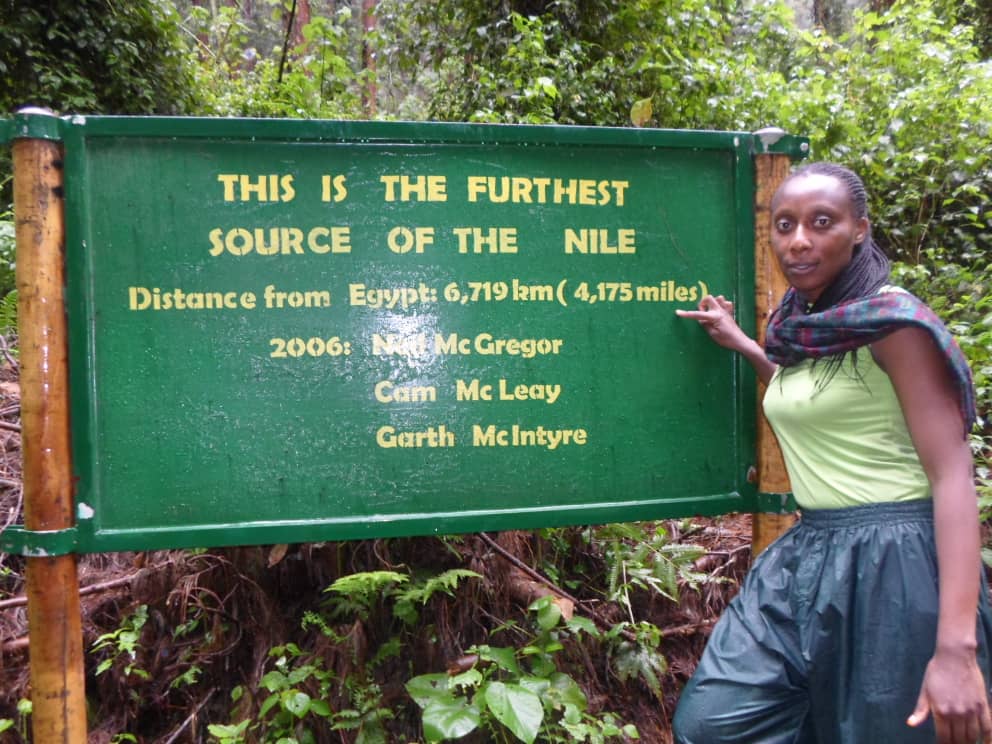
According to National Geographic, British explorer Neil McGrigor, New Zealander Garth Macintyre, and the team of Dr. Kate and George Heathcote conducted studies indicating that the Nile’s source lies within the Nyungwe forest, now designated as Nyungwe National Park. Wikipedia also notes that the Nile originates in Rwanda and flows through several countries, including Burundi, Tanzania, Uganda, South Sudan, Sudan, Ethiopia, and Egypt.
Historical Perspectives
In 1858, Scottish explorer John Hanning Speke suggested that the Nile’s source was in East Africa, where Kenya, Tanzania, and Uganda converge at Lake Victoria. For decades, lake victoria was widely considered the river’s origin.
However, in 2006, research by the expedition ascend the Nile, using advanced geographical and GPS technology, confirmed that the Nile’s longest tributary begins in Rukarara River, deep within Nyungwe Forest. Cam McLeay, leader of the expedition, stated:
“We are confident in our findings. We collected extensive data tracing the Nile’s main source. Using GPS and modern mapping technology, we established that the Nile stretches nearly 7,000 kilometers.”
Juan Jose Valdes, senior cartographer at the National Geographic Society, added:
“Identifying the Nile’s source is comparable to mapping the Amazon. The exact origin has long been debated, which is why the Society recognizes Rwanda as the primary source, with secondary sources in Burundi.”
Tracing the Nile’s Path
From its Rwandan origin, the Rukarara River merges with the Mwogo River, forming the Nyabarongo River, which eventually contributes to the Akanyaru and then the Akagera River, flowing into Lake Victoria near Ripon Falls in Jinja, Uganda. From there, it becomes the Victoria Nile, continuing through Lake Kyoga and Lake Albert.
Many still believe the Nile originates from Lake Victoria, where the Akagera River feeds into it, near Bukoba, Tanzania. Some sources assert that the river begins with the Ruvyironza River in Burundi or the Rukarara in Rwanda’s Nyungwe Forest. These rivers converge at Rusumo Falls on the Rwanda-Tanzania border.
Despite differing views, current research, as noted by Wikipedia, confirms that the primary source of the Nile is the Rukarara River in Nyungwe Forest, Rwanda, marking the beginning of the world’s longest river system.
Importance of the Nile
The Nile plays a critical role across East and North Africa. It supports agriculture, fishing, and hydropower production, particularly in Egypt, Sudan, and Uganda. The river has been used for irrigation since around 4000 BCE in Egypt, and modern dams, such as the Aswan Dam, continue to harness its waters for electricity and irrigation.
In Rwanda, hydropower projects on the Nyabarongo and Rusumo rivers demonstrate the Nile’s significance for energy generation. Across all Nile Basin countries, sustainable management is increasingly essential.
Cooperation in the Nile Basin
To ensure shared benefits, Nile Basin countries formed the Nile Basin Initiative (NBI) in 1999, aimed at managing the river sustainably and promoting regional development. In 2006, the Nile Basin Council of Ministers designated February 22 as the Annual Nile Basin Day, celebrating the river’s environmental, cultural, and economic importance across the basin.
The Nile, beginning in Rwanda’s Nyungwe forest and flowing over 7,000 kilometers to the mediterranean Sea, remains not only a lifeline for millions of people but also a symbol of regional cooperation and natural heritage.
Marie Chantal Nyirabera