



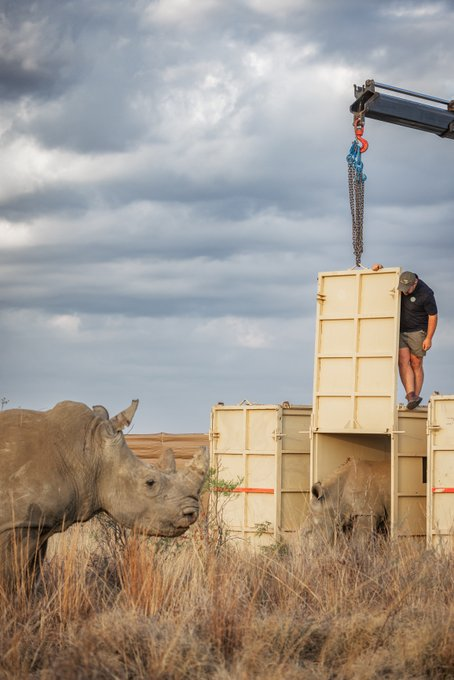
In the rolling savannahs of Akagera National Park, a quiet but powerful resurgence is underway: white rhinos, once extinct in Rwanda, now roam freely in numbers not seen in decades.
A Monumental Comeback
When 70 majestic white rhinos were reintroduced to Akagera National Park , it marked one of the most ambitious wildlife relocations in African conservation history. They joined a fragile but determined group of 30 rhinos reintroduced earlier, which had naturally grown to 41 individuals.
Today, Rwanda’s white rhino population has surpassed 100, a number that seemed almost unimaginable just a few years ago.
This milestone is more than a numerical achievement. It represents a nation’s deep commitment to ecological restoration and its growing influence in the global conservation.
Eugene Mutangana Head of Conservation Department in Rwanda Development Board say “
“They were brought through a partnership between the Rwanda Development Board (RDB), the Howard G. Buffett Foundation, and African Parks.”
Eugene Mutangana
“It is believed that the number will grow and become large. White rhinos are special because they are good for tourism. They do not hide from people. They like grazing in open areas. They will attract many tourists.”
Their return to Akagera is not only ecologically significant; it is symbolic Of
The Big Five and the Power of Presence.
In the world of African wildlife tourism, the term “Big Five” describe the most dangerous animals to track , today the Big Five—lion, elephant, buffalo, leopard, and rhinoceros represent a conservation success story in the making.
Akagera is now one of the few places in the world where tourists can witness all five in one Park.
For Rwanda, the rhino’s return was the final piece of this ecological puzzle. “The reintroduction of rhinos completes the Big Five in Rwanda,”
says a park visitors(tourits) in Akagera. “But more than that, it completes a dream.”
A Park Transformed
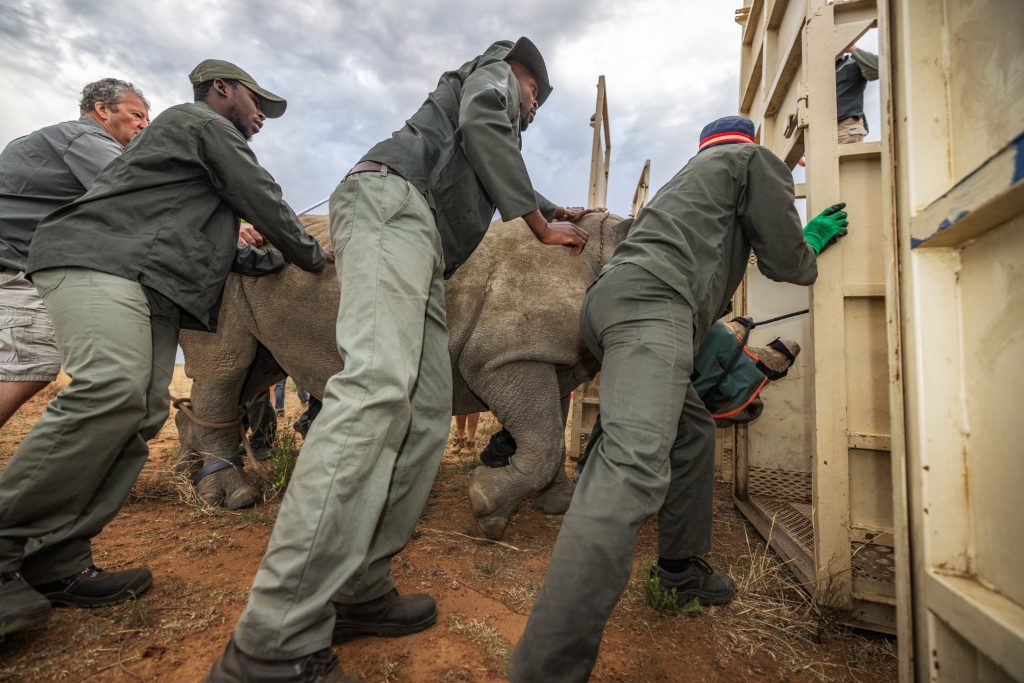
Rhinos play a critical role in this ecosystem in Akagera National Park.
As mega-herbivores, they shape vegetation structure, help maintain biodiversity, and provide food and habitat for smaller species. They are ecosystem engineers.
In Akagera, each rhino is closely monitored using satellite tracking, with ranger patrols operating day and night. Rwanda’s zero-tolerance policy toward poaching is a key factor in the park’s success story.
Hope for the Future
What is happening in Akagera is not just a Rwandan story. It is a continental story, an African narrative of ecological rebirth, national pride, and the possibility of coexistence between humans and wild giants.
As Akagera’s rhino population grows.
Marie Chantal Nyirabera
Rwanda For You Magazine
Photos REJ