





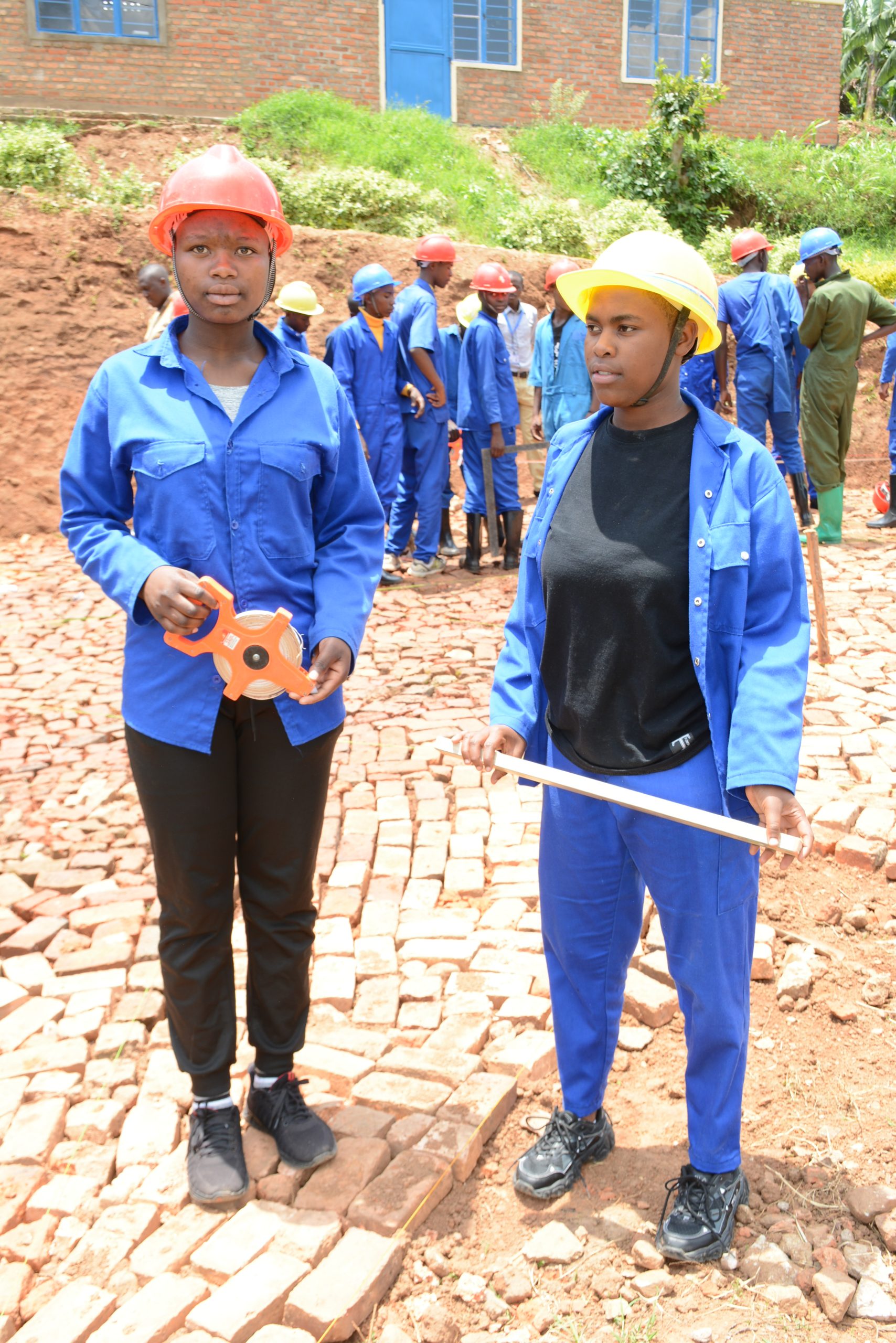
Traditionally, in Rwanda’s vocational training centers, technical subjects such as welding, mechanics, plumbing, and carpentry have been dominated by boys. Today, more girls are stepping into workshops, challenging stereotypes and proving that technical skills are not defined by gender.
This story explores their journeys, challenges, and triumphs as they reshape the narrative of technical education in Rwanda. As of 2023, girls accounted for 43% of all TVET enrollees, a remarkable increase from just 15% a decade ago.
Across the country, Technical and Vocational Education and Training (TVET) institutions are transforming gender perceptions by empowering girls to pursue careers once considered exclusively for men. Once viewed as physically demanding and unsuitable for women, technical fields are now attracting a growing number of determined young women who are demonstrating that skill, intelligence, and passion, not gender, define excellence.
Girls taking the lead in welding and construction
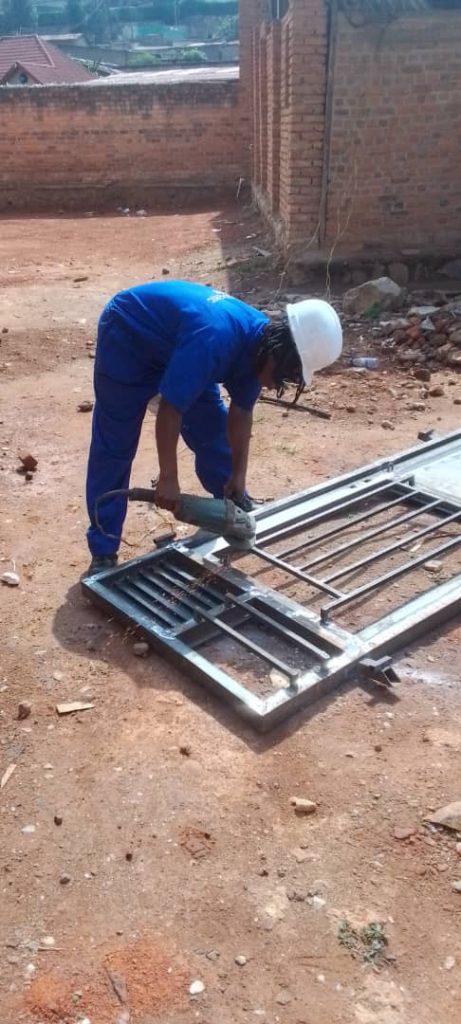
At CEFOTRAR TVET School in Nyarugenge District, Solange Uwimpuhwe, a welding student, decided to pursue vocational education after realizing that hands on technical skills are highly demanded in the job market. “TVET courses are extremely helpful because they prepare us directly for employment. I chose welding because I love it and I’m good at it. I’m now about to start my internship,” she explains.
Solange believes that vocational education exposes students to real-life work experiences early on, often helping them secure jobs even before graduation. “I encourage other girls to join technical courses like welding. It’s not as dangerous or difficult as people think. When you wear protective gear and take precautions, it’s perfectly safe and we girls can excel in it too.”
Jean Leonard Mukeshimana, a teacher at CEFOTRAR TVET, agrees: “Many of our female students are more dedicated than the boys and often perform even better. Girls should have the courage to join technical programs in greater numbers.”
At St. Sylvan TSS in Muhanga District, girls studying construction have also broken traditional boundaries. Niyobuhungiro Josiane and Dufitimana Ange are among them. “People used to tell me construction was for boys and that I wouldn’t manage. But I knew I could do it, and I’ve proven that I can. I want other girls to take inspiration from me and understand that there is no such thing as a job made only for men or women,” says Josiane.
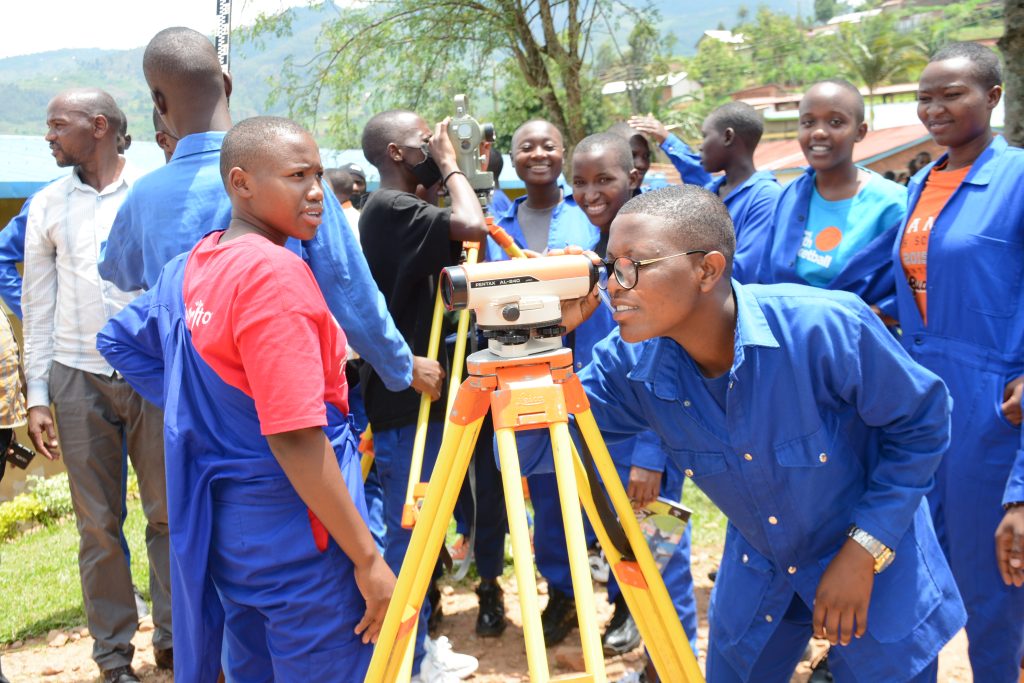
Ange adds: “After completing the program, it’s easy to find work and become self-reliant. I advise girls to trust themselves and learn technical trades, they are the foundation of development.”
Girls in automotive mechanics
At Kigali Leading TSS in Nyarugenge District, female students in automobile technology are mastering vehicle mechanics with confidence and precision.
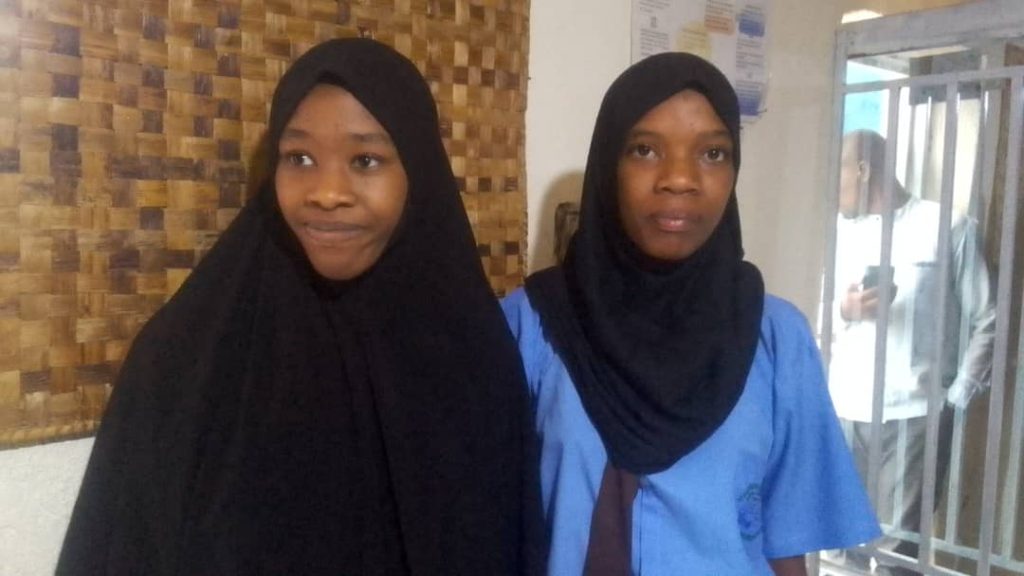
Majigija Aisha, a Level 3 student, proudly says: “I now know all the parts of a car, how to assemble and disassemble an engine and how to replace faulty components. I can diagnose mechanical problems and fix them myself.”
Her classmate Uwimana Shemsa shares her motivation: “I always imagined that when I grow up and buy my own car, I should know how it works and how to fix it if it breaks down. Even though we are only two girls in a class of eight boys, we compete equally, sometimes even outperforming them.”
She adds: “Girls have unique talents, and when we put in the effort, we succeed just like boys.”
Ephrem Kwitonda, Head of Kigali Leading TSS, notes that equal access to learning opportunities is essential in today’s fast-changing world: “The idea that some courses belong to boys or girls is a thing of the past. Our female students are among the most attentive and high achieving learners.”
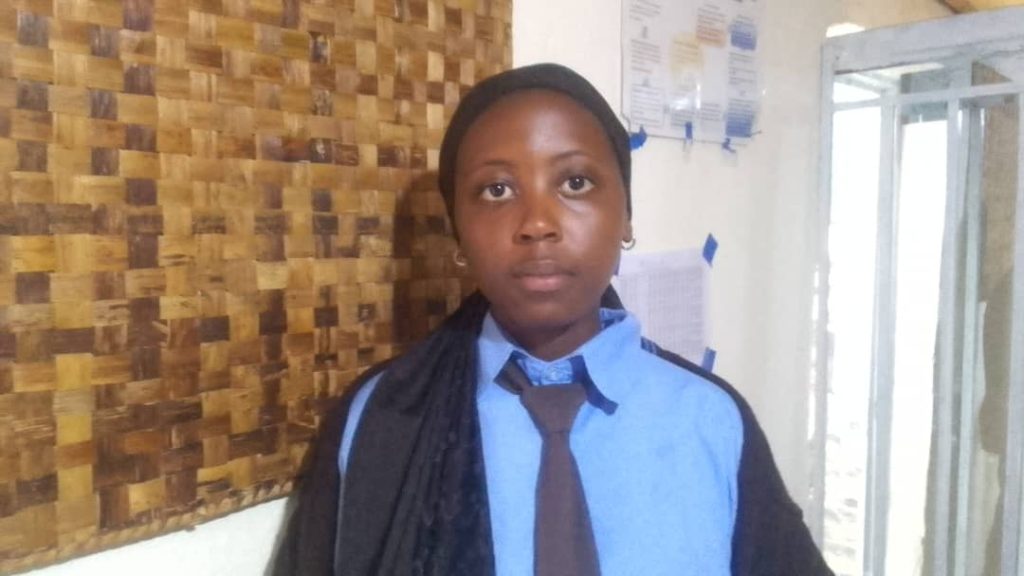
Meanwhile, Ingabire Jumaya, who studies software development at the same school, is thriving in a field once seen as male-only. “People told me coding was for boys, but I’ve learned that anyone can do it. I can now create websites and build computer security programs. I encourage other girls to join TVET studies, they open doors to employment faster than many academic programs.”
Girls in forestry and wood technology
At RP Kitabi College in Nyamagabe District, girls are also making their mark in Wood Technology and Forestry, fields still largely dominated by men.
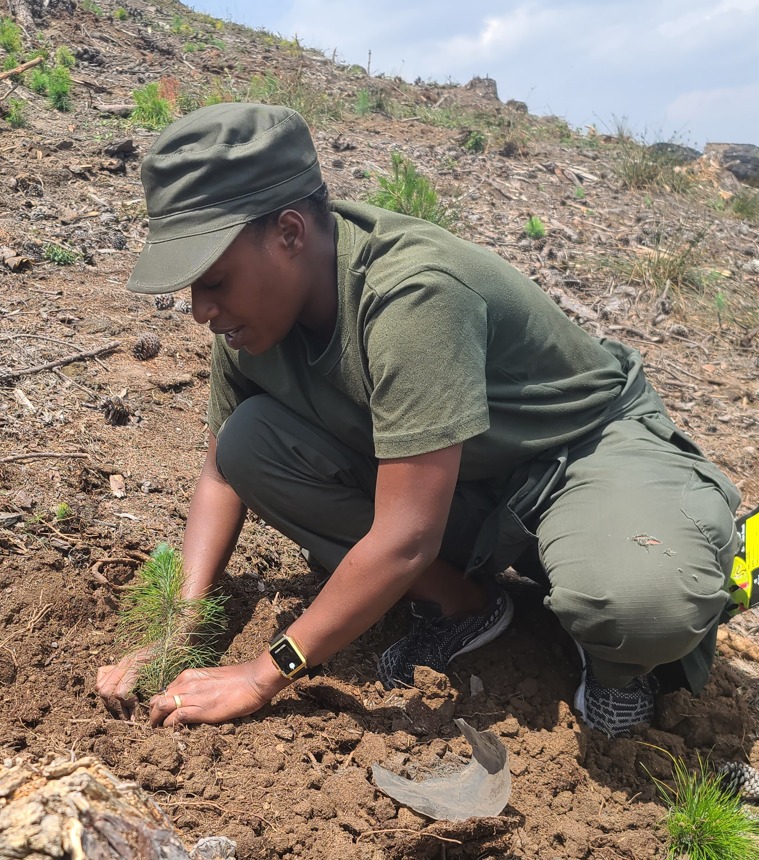
Although women remain a minority (six out of forty-nine students in the first year, seven out of sixty in the second, and seven out of twenty-nine in the fourth), their determination is reshaping attitudes. “My courage came from prioritizing my deep passion for nature over the fear of the unknown,” says Sheja Anitha Tomey, a forestry student. “I realized that my unique perspective could help create sustainable solutions beyond just timber, focusing on biodiversity and community wellbeing. My message to other girls is simple: don’t be afraid of male-dominated fields. Your voice and vision are exactly what the future of forestry needs.”
Her classmate Akimana Gemima adds: “Studying forestry is a great opportunity. It offers valuable knowledge and job prospects. Many people fear this field, but it’s easier than they think. I’m proud to be a girl in forestry, and I tell others not to listen to those who discourage them. Let’s build a better world by fighting climate change, protecting our environment, and planting trees.”
Manirakiza Gédéon, head of the Wood Technology and Forestry Department, confirms: “Girls are becoming more confident in these fields. Their performance is inspiring other young women to join.”
Don Bosco Gatenga TSS: A model of inclusion
At Don Bosco Gatenga TSS, female students are excelling in programs such as Electrical Engineering and Plumbing. They say they chose these subjects out of passion and a belief in their ability to contribute meaningfully to sustainable development.
The school proudly notes that one of its former female students, Niyirihura Lucienne, is now pursuing a degree in energy (solar) studies in Russia.
According to Uzamureba Clémentine, gender officer at Don Bosco Gatenga TSS: “Before the Gender Matters for Green TVET project was introduced here in 2023, there were only 19 girls. Today, there are 209 girls enrolled. This shows that mindset change is possible.”
Girls redefining technical skills in Rwanda
In the buzzing workshops of IPRC Kigali, sparks of change are flying not just from welding machines and circuit boards, but from the determination of young women who are challenging long-held gender stereotypes.
Mutoni Cécile, a graduate from the electronics department, says: “Confidence helped me uncover the talent I had inside. Thanks to my studies, I can now carry out electrical installations, identify and repair faulty devices, program systems, and even install surveillance cameras. There’s nothing a man can do that a woman cannot.”
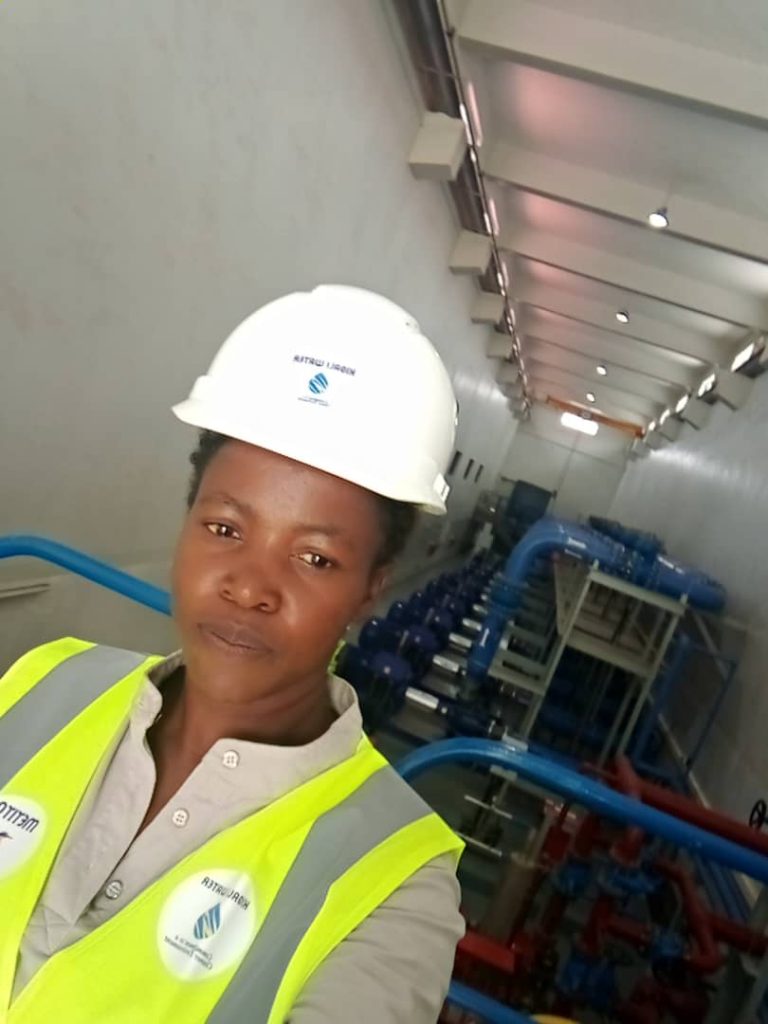
Another example is Olive, who works at WASAC and is completing her studies in Water Engineering at IPRC Kigali. “Technical studies are incredibly valuable,” she says. “If you dedicate yourself, you will never be jobless. Since I began my internship in 2016, I have never stopped working. By 2017, I already had a full-time job.” She adds: “At work, we collaborate well with our supervisors, and they’re always impressed by our performance. We deliver results equal to men and sometimes even better! I encourage all girls to believe in themselves. We have the skills, the intelligence, and the strength to excel.”
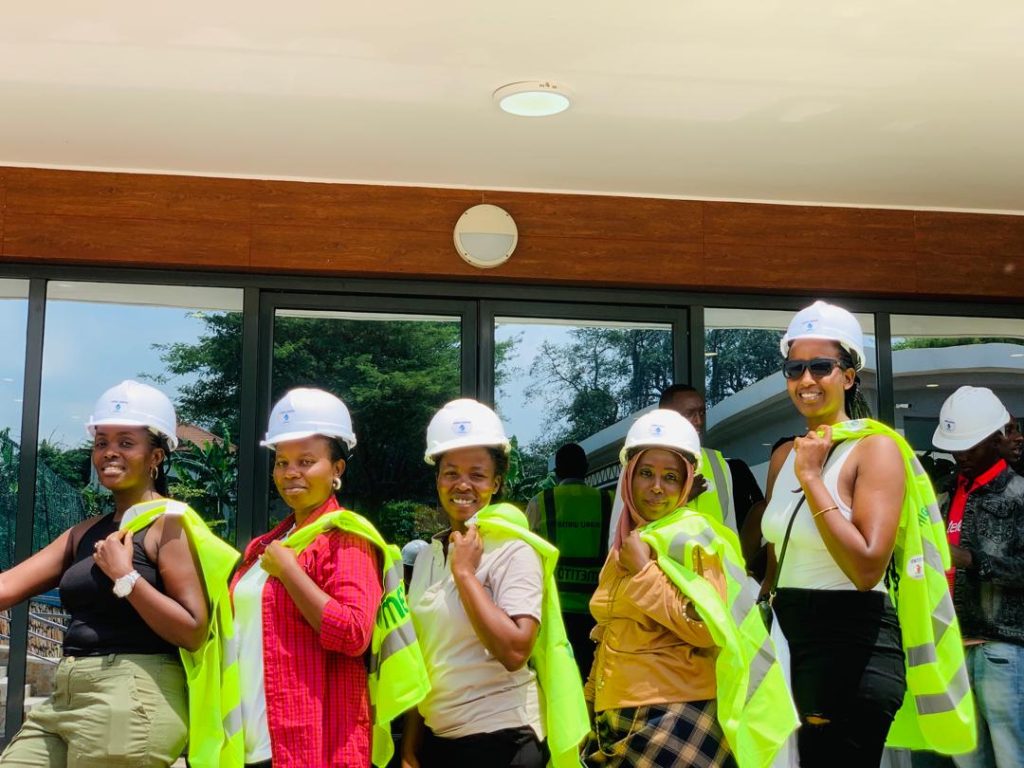
Parents and educators alike are witnessing this transformation firsthand. One parent of a girl enrolled in a TVET school says: “All children are capable of learning technical skills. The belief that such courses are only for boys is outdated.”
Rwanda’s TVET sector empowering the future
According to Rehema Mukankubito, Program Manager at the Rwanda TVET Board (RTB), vocational education is vital in addressing youth unemployment and building a skilled, self-reliant workforce. “TVET schools are essential for Rwanda’s labor market. They provide practical skills that directly lead to employment, helping to reduce youth unemployment,” she notes.
As of 2023, girls accounted for 43% of all TVET enrollees, up from 15% a decade earlier. At the polytechnic level, female enrollment has reached 30.7%, while across all TVET levels, girls now represent 43.4% of trainees. Today, more than 116,791 students, both male and female, are enrolled in TVET programs nationwide, supported by over 5,900 instructors, according to RTB data.
Despite this progress, the number of girls remains relatively low in fields such as food processing, water and irrigation, renewable energy, automobile mechanics, and construction, largely due to lingering cultural perceptions that such careers are better suited for men.
However, as more girls continue to excel in these areas, they are proving that competence has no gender, and that Rwanda’s future workforce will be defined not by stereotypes but by skill, innovation, and determination. Their success is lighting the path for the next generation of girls entering Rwanda’s workshops and laboratories.
By Marie Chantal Nyirabera